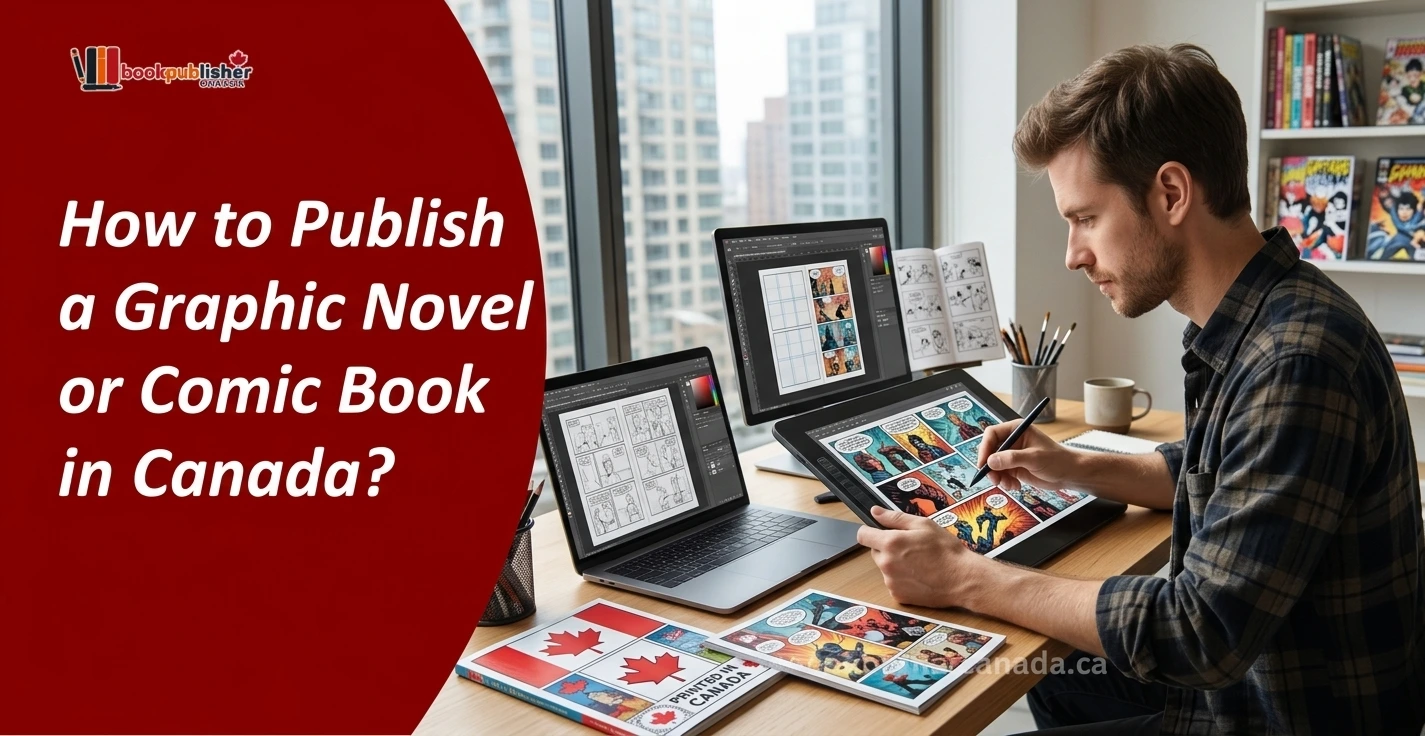
In Canada, the publication of a graphic novel or comic book is not only about telling an entertaining story and making illustrations. The writer or artist has to think about how to develop the manuscript, create characters and layout the panels, edit, format, print and distribute the work. No matter if it is a superhero comic book, manga, fantasy tale or independent graphic novel, knowledge of the publishing process will help the creator to make the right choice.
Here is a list of possible ways to publish your graphic novel in Canada – traditional publishing, independent publishing and digital self-publishing.
The first step is to develop a complete story with a clear beginning, middle, and ending. A graphic novel combines written storytelling with visual sequences, so the manuscript must communicate both dialogue and action effectively.
A well-organized manuscript makes it easier for editors, artists, and publishing professionals to understand the project’s direction.
Creators planning graphic novel publishing should also determine their intended audience. Children’s comics, young adult graphic novels, educational comics, and adult fiction have different storytelling and presentation requirements.
Choosing the appropriate method of publishing is determined by the budget, experience, distribution objectives, and creative control of the individual creating the work.
Traditional publishers usually review completed manuscripts, story outlines, artwork samples, and marketability. Upon acceptance of the publication, the publisher can organize all aspects from editing to marketing.
Alternatively, independent creators can self-publish a comic book by managing the production process themselves or hiring professionals for individual services.
| Publishing Factor | Traditional Publishing | Self-publishing |
| Creative control | Dependent on publisher agreements | Greater creative freedom |
| Upfront costs | Dependent on publisher agreement | Dependent on author |
| Editing and artwork | Dependent on contract | Independent |
| Printing | Publisher manages | Dependent on author |
| Distribution | Dependent on publisher network | Author or outsourced |
| Royalties | Dependent on publishing agreement | Dependent on sales and expenses |
Both are not a guarantee for commercial success. The creators should analyze publishing agreements, production costs, copyright rights, and expected sales.
One of the essential elements of a comic book is visual storytelling. The artistry must portray the characters’ emotions, motion, mood, and actions without confusing the reader.
A graphic novel illustrator should understand sequential storytelling, character consistency, perspective, panel composition, and visual pacing.
Choosing an illustrator involves looking at their past work and requesting samples. These are some of the things you need to agree on before starting the job:
Consistency is also key in professional illustration. Characters must look consistent, but backgrounds and expressions can enhance the story.
Once the story and artwork are finalized, the next stage is preparing the files for publication. Comic books and graphic novels require careful page arrangement because image placement, panel spacing, dialogue, and typography directly affect readability.
These aspects include trim size, number of pages, margins, bleed areas, image resolution, color profile, and binding styles.
For comic book printing, it is important to request printer specifications before finalizing the artwork. High-resolution images and properly prepared print-ready PDFs help prevent blurred illustrations, incorrect colours, and text being cut off during production.
Some common production choices include:
If you are thinking about publishing your book on KDP, then you need to check out KDP’s latest specifications on paperback and hardcover books.
Canadian creators interested in manga should consider both local and international readership. Manga generally follows a distinctive visual storytelling approach, including specific panel arrangements, character expressions, and reading conventions.
Before deciding to publish a manga, creators should establish whether the intended edition will follow right-to-left or left-to-right reading. This decision affects page sequencing, dialogue placement, and overall formatting.
Writers should also research suitable publishing companies and digital platforms. A graphic novel publisher Canada creators approach should be evaluated according to its experience with illustrated books, genre requirements, production services, and distribution arrangements.
Some publishing houses accept unsolicited manuscripts, whereas others insist that authors have agents or submit proposals. It is better to look into the submission requirements before sending the manuscript.
Printing a finished book is only one part of the publishing process. Creators also need a strategy for making their work available to readers.
Comic book distribution can involve several channels, depending on the publishing arrangement and intended audience.
Possible distribution methods may include the following:
Before selecting a Hardcover Publisher, creators should understand the available binding options, production costs, minimum order quantities, and distribution arrangements.
In addition to comparing publication packages, authors should also see if services like editing, cover design, layout formatting, printing, and distribution are offered in the package. Knowing about these services will enable authors to prevent any surprises and choose an appropriate publication package.
As far as the production process for illustrated books is concerned, production quality is as important. Authors should consider factors like paper quality, color reproduction, binding, and sample copies.
A Graphic Novel Publisher can help coordinate different stages of the publishing process, depending on its service offerings. However, creators should review contracts carefully to understand which services are included and which expenses remain their responsibility.
Before publication, conduct a final review of the manuscript, illustrations, formatting, and production files. Even small errors in dialogue, panel order, page numbering, or image placement can affect the reader’s experience.
Check for the following:
The creators must also set realistic production budgets and timeframes. This will prevent unnecessary costs and keep quality consistent.
Professional Book Illustration plays an important role in maintaining visual quality and consistency. Reviewing character designs, colours, and artwork details before publication helps create a polished reading experience.
A graphic novel or comic book publishing in Canada needs to plan carefully, design creatively, produce artistically, format appropriately, and distribute effectively. Writers have an option to publish their work either traditionally or independently.
With the knowledge of what is out there and proper preparation at each step, authors can convert their ideas into a professionally produced book that can reach readers through appropriate means.