There are other steps in publishing that go beyond just writing and editing the manuscript. Authors need to do a lot more for the publication of their books as far as identification, distribution, and retail sales are concerned. The International Standard Book Number (ISBN) helps in that respect since it is an identifier for the specific edition of the book in question.
Knowing about the ISBN Canada rules will help the authors to be aware of the mistakes that they should not make when registering their books. Eligible Canadian publishers can get ISBNs free of charge without having to pay any registration fees.
The International Standard Book Number (ISBN) is a special 13-digit code that identifies each publication. The ISBNs enable booksellers, libraries, distributors, and e-commerce sites to differentiate publications and keep their inventories organized.
ISBNs are valuable for authors who intend to publish their works through various outlets. This enables them to differentiate editions in order to effectively manage publications such as hardcopy and e-books.
Nevertheless, the ISBN code cannot provide any copyright protection nor guarantee copyright ownership to the author.
The Canadian ISBN Agency operates through Library and Archives Canada and provides ISBN services to eligible Canadian publishers. Individual authors may apply as self-publishers if they are physically located in Canada.
The company should be incorporated in Canada, and at least 75% of its personnel should be physically located in Canada. In addition, the individual or the company that is applying should have the right to publish and disseminate the publications among the Canadian population.
Authors who intend to publish only in French should contact BAnQ (Bibliothèque et Archives nationales du Québec) to register for an ISBN and not the English website.
For free ISBN Canada registration, applicants should review the agency’s eligibility requirements before creating an account. Meeting these conditions helps prevent unnecessary delays and rejected applications.
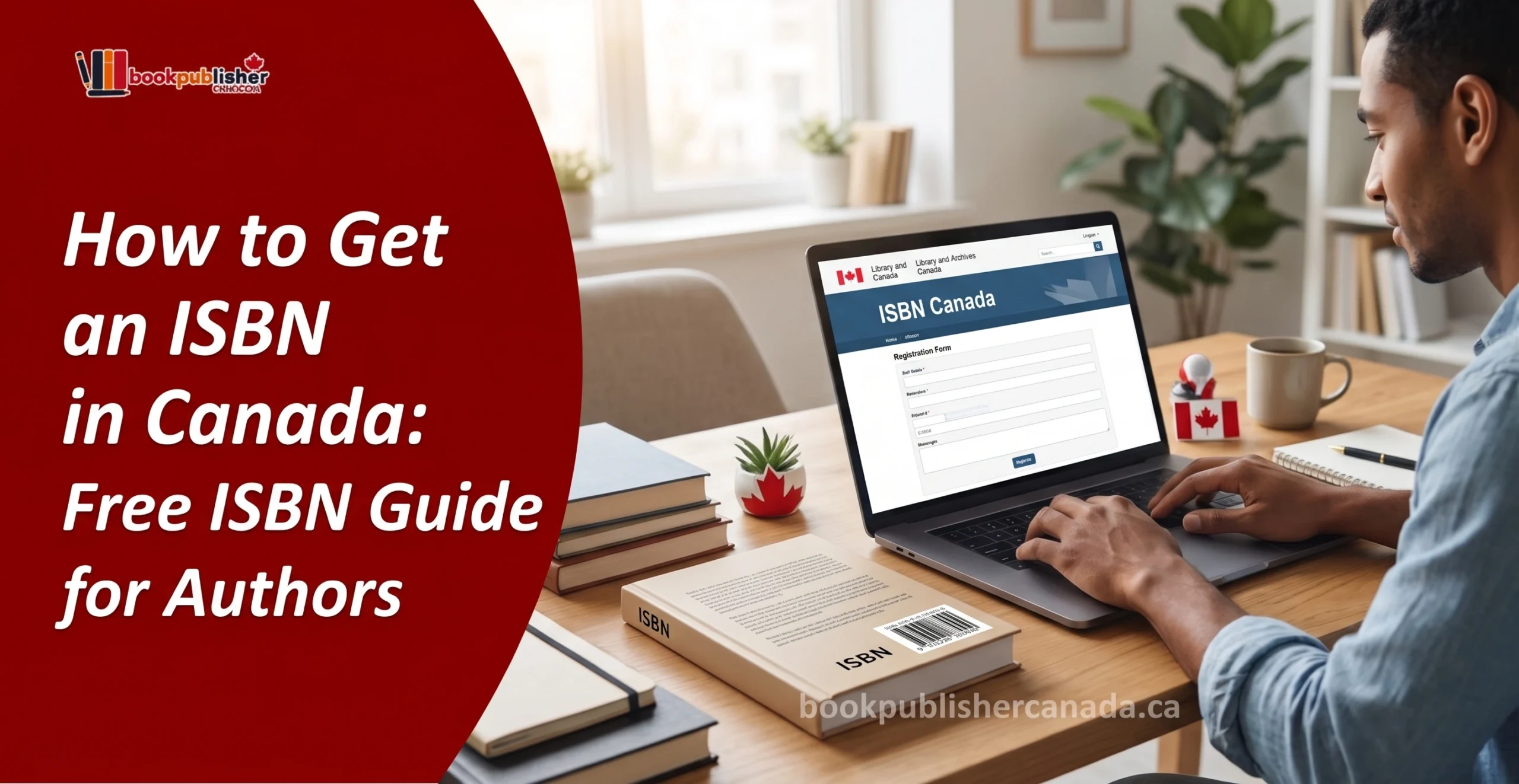
The registration process involves creating a publisher account, submitting the required information, and assigning an ISBN to an individual publication.
Step 1: Visit Library and Archives Canada
Open the official Library and Archives Canada website and navigate to its ISBN services section. Review the application guidelines and publisher eligibility information.
Step 2: Create a Publisher Account
Fill in the registration form with the required personal or business data. Individual authors are expected to give accurate information on their publishing activities and future publications.
Step 3: Submit the Application
Review the information before submitting the account request. Ensure that the contact details and publisher information are correct to avoid communication problems during the approval process.
Step 4: Wait for Approval
The agency reviews new applications before granting access to its ISBN management system. Processing times can vary, so authors should apply well before their planned publication dates.
Step 5: Assign an ISBN
Once your account has been approved, log into the ISBN management system and choose the “Create an ISBN” option. Then provide all of the required information for the publication, such as the name of the publication, the author, edition, and format.
This is how you can get the publication identifier via the official Canadian system.
Yes, usually different formats call for different ISBNs because they constitute different publications. Authors planning on publishing in different formats need to determine their ISBN registration needs before finalizing their distribution strategy.
| Format of Publication | ISBN |
| Paperback | Yes |
| Hardcover | Yes |
| EPUB ebook | Yes |
| PDF ebook | Yes |
| Audiobook | Yes |
| Revised edition | Yes |
The conditions related to ISBN for ebook and paperback publications are especially relevant if the author plans to distribute his/her work in both digital and paper formats.
It is possible for authors using Amazon Kindle Direct Publishing to publish their Kindle ebooks without ISBNs. However, both paperback and hardcover publications require ISBNs, which KDP can provide for free.
This decision is dependent upon the publishing and distribution model that you wish to adopt. An ISBN issued by the Canadian organization provides more freedom of distribution of publications by qualified publishers among various retailers.
An ISBN provided by KDP is ideal for authors who want to publish their print editions via Amazon. Nevertheless, an ISBN provided by KDP is specific to KDP only.
Authors planning broader distribution should consider obtaining their own ISBNs so they can maintain greater control over their publishing arrangements.
An ISBN identifies a publication, while a barcode converts its identifying information into a format that compatible scanning equipment can read. Bookstores and distributors commonly use barcodes to process sales and manage stock.
Authors preparing barcodes for books in Canada should ensure that the barcode corresponds to the correct ISBN. The barcode is usually positioned on the back cover and must remain clear, properly sized, and readable.
Canadian ISBN Agency does not offer barcode images. Authors can source these from printers, cover designers, or other relevant barcode service providers.
Accurate publication information is essential for successful ISBN management. Authors should verify the spelling of the book title, author name, publisher details, edition, and publication format before assigning an identifier.
An ISBN Canada application for self-published authors should also reflect the actual publishing arrangement. Authors must not reuse an ISBN for different formats or transfer an assigned number to another publisher.
A Self Publisher should organise publication details, cover files, and distribution information before beginning the registration process. When preparing printed editions, the ISBN on the copyright page should match the barcode used on the back cover.
Authors should also review their publication information before submitting files to retailers or printing services. Consistent titles, author names, edition details, and format descriptions help prevent identification and distribution errors.
ISBNs planned in advance could help manage the entire publishing process. In the case where authors plan to publish several editions, it is advisable that they plan on the ISBNs before finalizing their cover designs, layout and distribution methods.
When an author is planning on self-publishing, understanding the whole registration process could make the process of distribution easier. Getting the right ISBNs and choosing the best method of distribution is important when launching a book in Canada.
It is also necessary to have the correct ISBN when preparing a book for publishing and distribution in Canada. Authors who know how registration works, how books are identified depending on the format, and how to prepare barcodes can easily prevent the most common publishing mistakes and plan their publications accordingly. The well-thought-out plan will also help to make sure that all of the files created during Book Printing include all the necessary information about the publication and can be sent for professional printing.